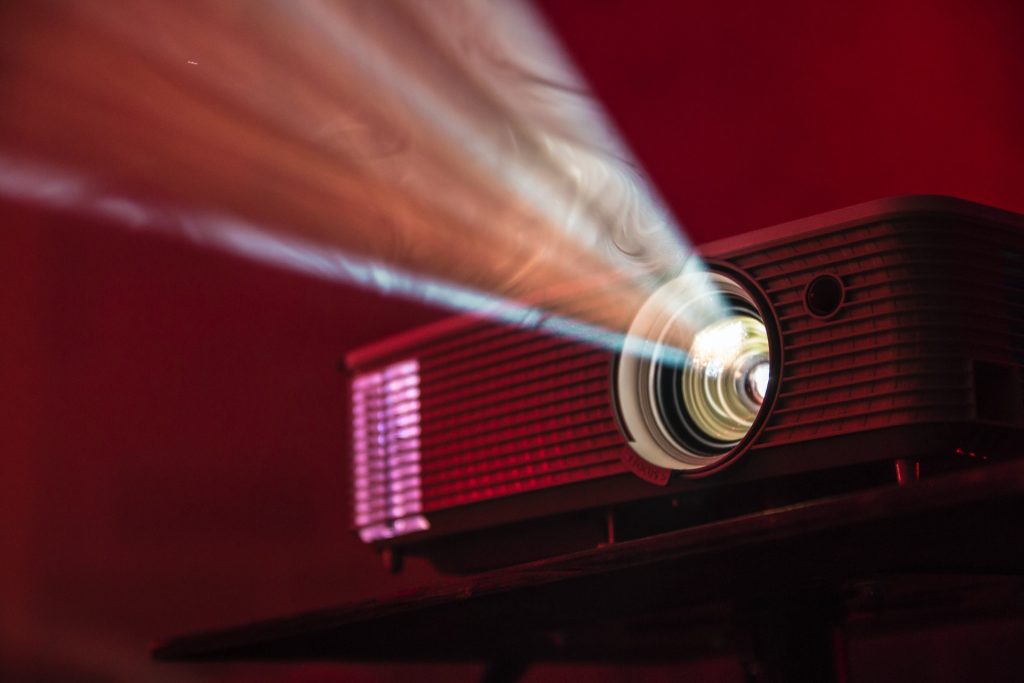
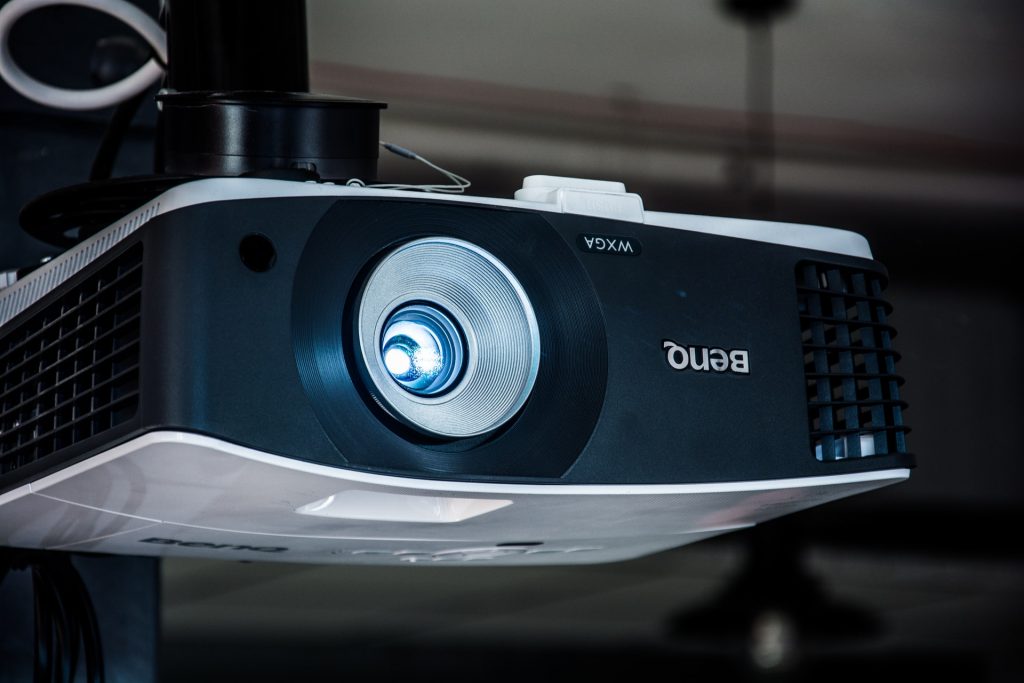
Shopping for a laser projector is not as easy as you might think. There are so many options to choose from all with different specs. And, to make matters worse, most manufacturers and salespersons include a lot of technical jargon to get you off your tracks.
That’s not all – there’s more:
You also need to consider many factors such as the type of laser projector you want, its cost, additional features, noise levels, etc. These factors will allow you to enjoy your entertainment to the fullest.
That’s why we’ve gone the extra mile to prepare this comprehensive laser projector buying guide. We’ll cover everything you need to know to help you decide when buying a laser projector.
We’ve also included pro tips across the article – be sure to pay extra attention as they’ll provide you with additional information.
With that in mind, let’s get started!
Quick Takes on Why Laser Projectors Are Becoming so Popular
It’s true that laser projectors are continually becoming popular – and for good reasons. Laser projectors offer superior image quality with vibrant images and accurate color production compared to traditional lamp-based projectors.
They also have lower maintenance costs and a longer lifespan than lamp-based projectors. Remember, lamp-based projectors require lamp replacement after a few thousand hours, which is inconvenient.
Laser projectors can last at least 20,000 hours, meaning they have fewer downtimes.
Beyond superior image quality and lesser downtimes, laser projectors are more energy-efficient. This means they save a lot on electricity costs compared to lamp-based projectors.
Here’s the deal:
Laser projectors are a wise investment for anyone looking to buy one or even upgrade from a lamp-based projector.
Types of Laser Projectors
There are four different types of laser projectors – check them out:
1. Single-Chip Laser DLP Projector
A single-chip DLP projector uses a single DMD (digital micromirror device) to create an image. They are popularly used in large venues like auditoriums and theaters because of their high level of brightness.
They also have excellent contrast ratios – meaning you get to see darker blacks and brighter whites properly.
2. Three-Chip Laser DLP Projector
Three-chip DLP projectors are slightly different from single-chip DLP projectors because they use three DMDs to create an image. The more the DMDs, the wider the color gamut, resulting in more accurate color production.
You’ll find the three-chip DLP projector installed in professional settings or even as high-end projectors in homes.
3. LCD Laser Projectors
This type of projector uses liquid crystal display technology to display images. You’ll most likely find them in medical and scientific institutions because they are well-known for their high-color accuracy and uniformity.
4. LCoS Laser Projectors
LCoS (Liquid Crystal on Silicon) laser projectors offer high-resolution images with excellent contrast. These projectors are found in professional institutions, e.g., company boardrooms, conference rooms, etc. They can also be used in home theaters.
Factors You Need to Consider Before Buying a Laser Projector
You need to consider several factors before buying a laser projector. Check them out:
1. Price
It’s no secret that laser projectors are significantly expensive compared to lamp-based projectors. As such, it would be best to consider a laser projector’s price and compare it with your budget.
Pro tip: While budgeting matters, we strongly advise against compromising quality for a cheaper price. In the long run, the initial cheap price will attract you but maintaining the projector can become too expensive.
For example, the laser projector you bought may break down often or even cease to function completely shortly after acquiring it.
2. Brightness
Projector brightness is yet another essential factor that must not be ignored when shopping for projectors, in general. It is measured in lumens (or ANSI lumens). A rule of thumb is the higher the lumen count, the brighter the projector.
Now, when considering the brightness level you need your ideal laser projector to have, you’ll need to consider your room size. You’ll additionally need to consider ambient light – how bright is it and is it controllable?
Check this out:
Using a laser projector that produces low brightness in rooms or environments with bright ambient light will cause images to appear washed out. The principle is similar to how a car’s headlight lumination can be observed in its fullness at night as opposed to during the day.
It would be best if you’d use a brighter laser projector in brighter environments to avoid viewing washed-out images.
3. Resolution
While your projector may be bright enough for rooms with a lot of ambient light, resolution greatly enhances the image quality. A rule of thumb is to go for higher-resolution laser projectors, especially if you intend to watch your favorite movies or series episodes or even play games.
Laser projector resolution refers to the number of pixels a projector can display. And, since higher resolutions are better, the images will appear sharper.
Pro tip: Laser projector resolution is just one of the many factors that affect the quality of images your projector will produce.
4. Contrast Ratio
As you read earlier in this article, contrast ratio is yet another essential factor that directly contributes to better image quality display from your projector. Similar to resolution, higher contrast ratios are usually better.
Here’s why:
Picture this: You’ve just poured yourself a drink on a Friday evening, ready to enjoy your favorite series, Game of Thrones. You plug your external storage into your new laser projector’s HDMI port, and you start watching the first episode of the new season.
A night scene appears, and you cannot see what’s happening. You can only hear the exchange of words, but you cannot really see what’s happening – and that’s mainly because your projector has a low contrast ratio.
Here’s the deal:
A higher contrast ratio allows you to see darker blacks and brighter whites, enhancing your entertainment experience.
Consider looking for a laser projector that has a higher contrast ratio.
5. Throw Ratio
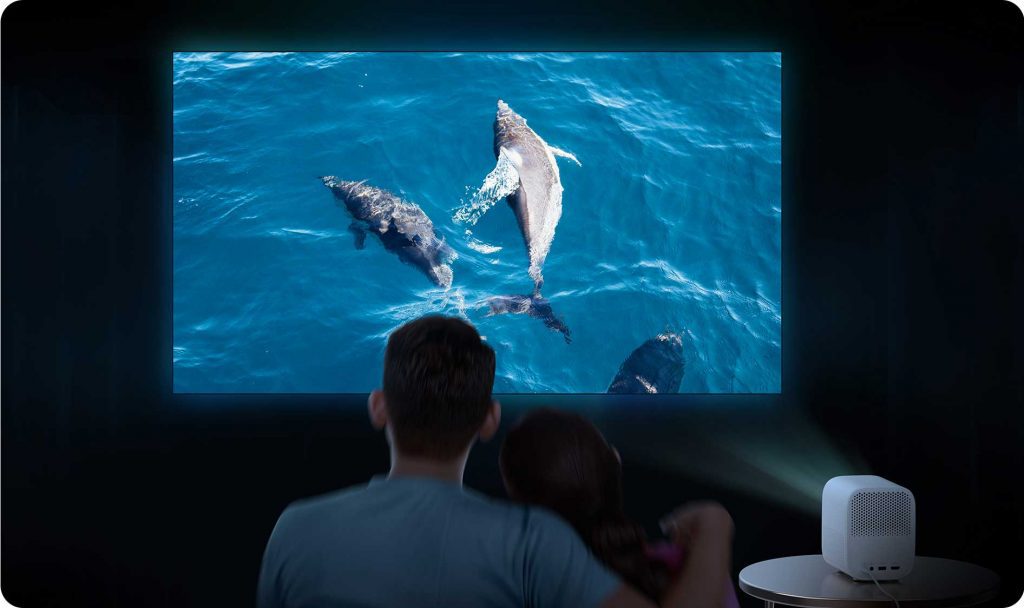
The throw ratio in projectors refers to the distance between the projector and the projector screen to the width of the projected image. The throw ratio indicates how far a projector must be placed from the projector screen to achieve a given image size.
You’ll most likely see throw ratios in numerical expressions such as 1.4:1.
Check this out:
When shopping for a good laser projector, choose the one with a short throw ratio, especially if your home theater isn’t that big. A projector with a short throw ratio can be placed closer to the projector screen and still display a large image.
6. Audio Capabilities
It’s no secret that a projector’s audio capabilities can significantly impact your viewing experience. A projector with good audio capabilities allows you to enjoy the displayed content.
Consider a projector with built-in speakers when shopping for a good laser projector. It would be best if the projector also had an easy and stable way of connecting it to external speakers – either wired or wireless connectivity.
When looking at a laser projector’s audio capabilities, you’ll most likely come across something like a “5W Built-in speaker”. The “W” represents wattage, and, the higher the wattage, the better the sound quality. Higher-wattage speakers produce a clearer sound.
7. Connectivity Options
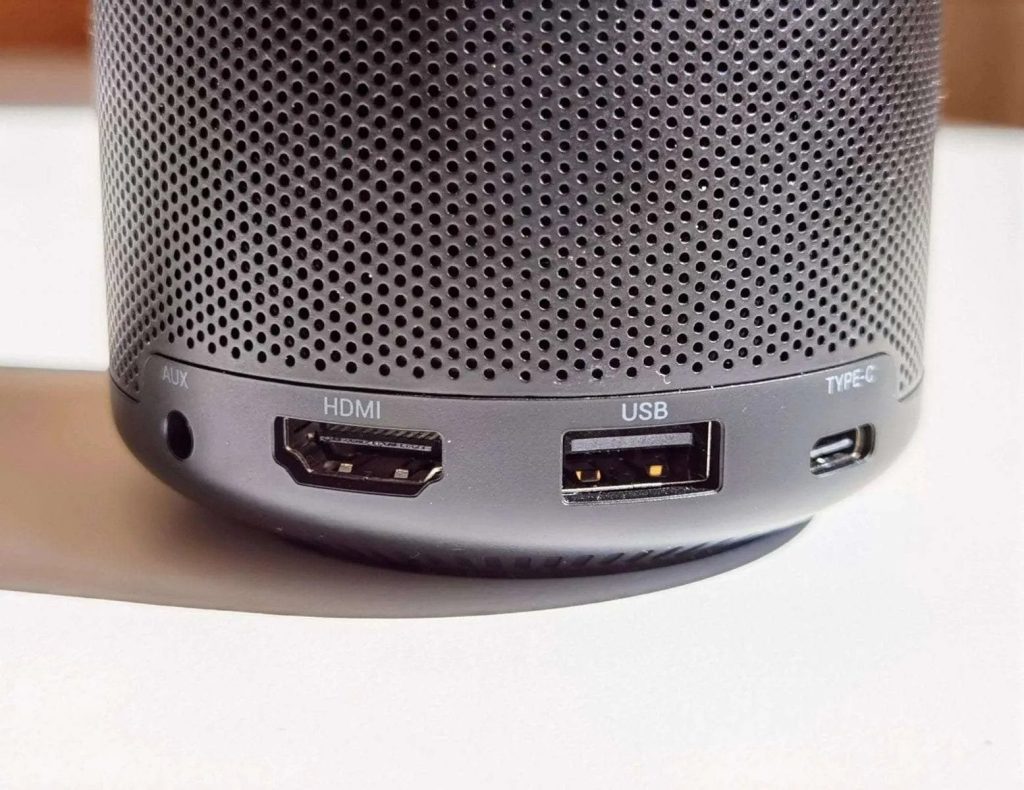
Connectivity options in a laser projector are a top-tier consideration you must not ignore because it determines the types and method of connectivity of other devices to the projector. The more connectivity options a projector has, the more versatile it is and the more useful it can be in different settings.
Connectivity options can allow you to connect different types of devices without any hassle. They also significantly impact the image quality being displayed. A perfect example is how HDMI provides a better image quality than VGA and carries audio.
Consider getting a laser projector with an array of wired and wireless connectivity options.
Making Sense of it All
Laser projectors are far better than lamp-based projectors because they provide superior image quality and have a longer lifespan. In addition, they do not consume a lot of electricity and do not generate a lot of heat – meaning that they are more silent than lamp-based ones.
However, shopping for a laser projector is not easy, mainly because of the many options available, making your selection process harder. And it’s no lie that laser projectors are here to stay for the foreseeable future.
When shopping for a laser projector, consider using our 7-step method above to help you get the ideal projector that meets your needs and is within your budget. While laser projectors produce superior image quality with vibrant colors, the surface of projection also matters a great deal.
Read our comprehensive guide on how to select the ideal projector screen. The best laser projector and the best projector screen will certainly enhance your entertainment.