Selecting the ideal projector screen size can be an intimidating process. It requires you to have subjective knowledge of where you’d want the screen to be. In addition, you’ll also need to know other technical specifications such as the screen’s aspect ratio, the distance between your projector and projector screen, etc.
The correct projector screen size is essential as it’ll help you enjoy watching clear life-sized videos or viewing high-quality presentations. You’ll get to understand the following concepts by reading this article:
- Why having the right projector screen size matters
- Factors that affect projector screen size selection
- How to select a projector screen size for small, mid-size, and large room settings
Let’s get started!
Why Having the Right Projector Screen Size Matters
Selecting the ideal projector screen matters a great deal – it affects your viewing experience.
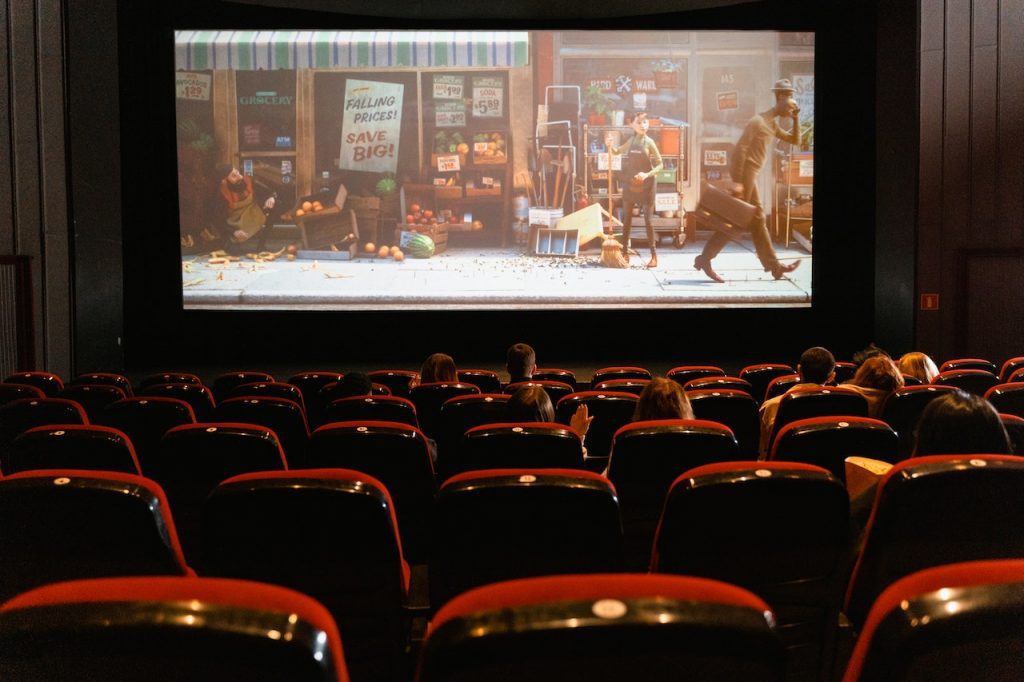
It is essential to understand that selecting a bigger projector screen size does not guarantee an incredible viewing experience.
Projector screen sizes are subjective to the room where you’d want to use your projector. Here’s how your selection affects your viewing experience:
Imagine this; you’ve recently remodeled your home theater and would like to buy a new screen. You head to the electronic store and buy a 200” screen size that will cover your home theater’s entire wall where your projector faces.
After setting up your screen and switching on your projector, you find that your projector has a smaller recommended image size than the screen size you bought. In addition, the view is not so clear since your home theater is not that big because you’re forced to sit too close to the screen.
Now imagine that you bought a screen that is too small. You’ll still be dissatisfied with the viewing results that you’ll get.
Here’s the deal:
You cannot just buy any projector screen size at the electronics store. There are five factors that you need to consider. Check them out:
- Aspect ratio
- Projector screen construction
- Brand and Price
- Distance of the projector from the screen
- Viewing angle
We’ll discuss these factors in detail in the next section of this article.
Bottom line:
A bigger projector screen size does not guarantee a better viewing experience.
Factors that Affect Projector Screen Size Selection
1. Aspect Ratio (Screen Size Format)
Aspect ratio refers to your projector screen’s size (and, by extension, shape). It is the ratio between your projector’s screen width and height. For example, a 16:9 projector means that the width has 16 units of measure while the height has nine.
You might think to yourself:
“How does aspect ratio affect projector screen size selection?” Here’s how:
Aspect ratio helps you match your projector with a proper screen size to display clear and crisp images or videos. It would be best for you to consider these two key factors before settling for a given aspect ratio:
- Video or image format
- Your projector – you can use it to project images on a 16:10, 16:9, 2.35, and 4:3 screen if it supports any of these formats.
Different projector screen size formats are ideal for different settings. Here are the four most common projector screen size formats:
● 16:9
A screen with an aspect ratio of 16:9 is popularly used as an HD widescreen for small settings such as a home theater. The best part about using high-quality 16:9 projector screens is that they can support 720p (in some cases), 1080p, and 4K.
If you pair a 16:9 projector screen with the right projector, you’ll get to enjoy high-resolution videos – taking your entertainment to a whole new level!
● 16:10
Also known as the widescreen PC, a 16:10 projector screen is similar to a 16:9 screen. The 16:10 projector screen is mainly used to project images from a widescreen PC hence the name.
The primary difference between the two is whether your projector supports the 19:10 video format and whether the image or video format is in 16:10.
● 2.35:1
This projector screen aspect ratio is ideal for cinema rooms. It is popular in business cinema halls or home theaters to display movies.
● 4:3
The 4:3 projector screen aspect ratio is rarely used nowadays as most video formats are in the 16:9 format. However, if you are a fan of the good old movies, a 4:3 projector screen may benefit you.
2. Screen Construction Type
There are two primary screen construction types;
- Portable projector screen
- Fixed projector screen
Most portable projector screens are not big. They can be easily folded and carried around. However, fixed-frame projector screens can be both big and small since they are immobile.
Bottom line:
Projector screen construction types affect the size of a projector screen. Portable screens are often small, while fixed projector screens can be both big or small, depending on the space where the screen is to be put.
3. Projector Screen Brand and Price
Good projector screens come from established brands. In addition, quality projector screens are not cheap. Simply put, larger screens cost you more money, mainly if the material used to make them is of the best quality.
It would be best if you’d find a projector screen with a good balance between size, price, and purpose. Also, consider getting a projector screen that will pair properly with your projector.
4. Projector Distance from the Screen
You might experience the “shadow effect” if your projector screen is too close to the projector. The shadow effect causes your screen to reflect blurry images and videos because the projector is out of focus.
On the other hand, if the projector is placed too far from the projector screen, then the image displayed will be too small.
Here’s the deal:
Your projector determines your projector screen size. You’ll need a projector screen that pairs well with your projector.
5. Viewing Angle
Larger audiences require larger projector screen sizes. Your audience’s field of view should not exceed 40 degrees when watching a movie or viewing a presentation. Otherwise, your audience will struggle to watch either from the far right or far left.
How to Select a Projector Screen Size for Different Settings
1. Small Settings (Home Theaters)

Small settings such as home theaters do not require large screens. Typical home theaters are equipped with fixed 80” to 120” projector screens. You can also have a portable but smaller screen – most portable screens can be as big as 40”.
In addition to projector screen size, it would be best to consider which aspect ratio is ideal for the type of movies you want to watch. Most home theaters use a 16:9 aspect ratio that supports 720p, 1080p, and 4K displays.
If you wish to watch older movies, consider selecting a projector screen with a 4:3 aspect ratio.
However, it is vital to keep your projector in mind when making this selection since most projectors will support both 16:9 and 4:3, but the latter display might not be as clear as you’d want it to be.
2. Mid-size Settings (Classrooms, Lecture Halls, Conference Rooms)
Standard mid-size rooms such as classrooms and conference projector screen sizes range from 60” to 72”. However, these screen sizes can get bigger than this, depending on the size of your audience.
Mid-size room screens are often electric or manual pull-down screens attached to the room’s ceiling.

One of the key advantages of using electric or manual pull-down projector screens is that they save a lot of space when not in use. You’ll only need to retract them to use other parts of your classroom or conference room (such as a whiteboard).
It would be best for you to get a projector screen with an aspect ratio of 16:10 (widescreen PC). Most people who’ll be presenting are probably going to use their computers. It will allow the presenter to display up to two full-page pages that are viewed side by side.
Always ensure that your projector supports your projector screen’s aspect ratio.
3. Large Settings (Cinema Rooms, Exhibition Halls)
Cinema rooms and exhibition halls are no different from home theaters, only that they are way bigger. Large settings require large screens – for example, a cinema room with a capacity of 400 seats will require at least a 200” projector screen.
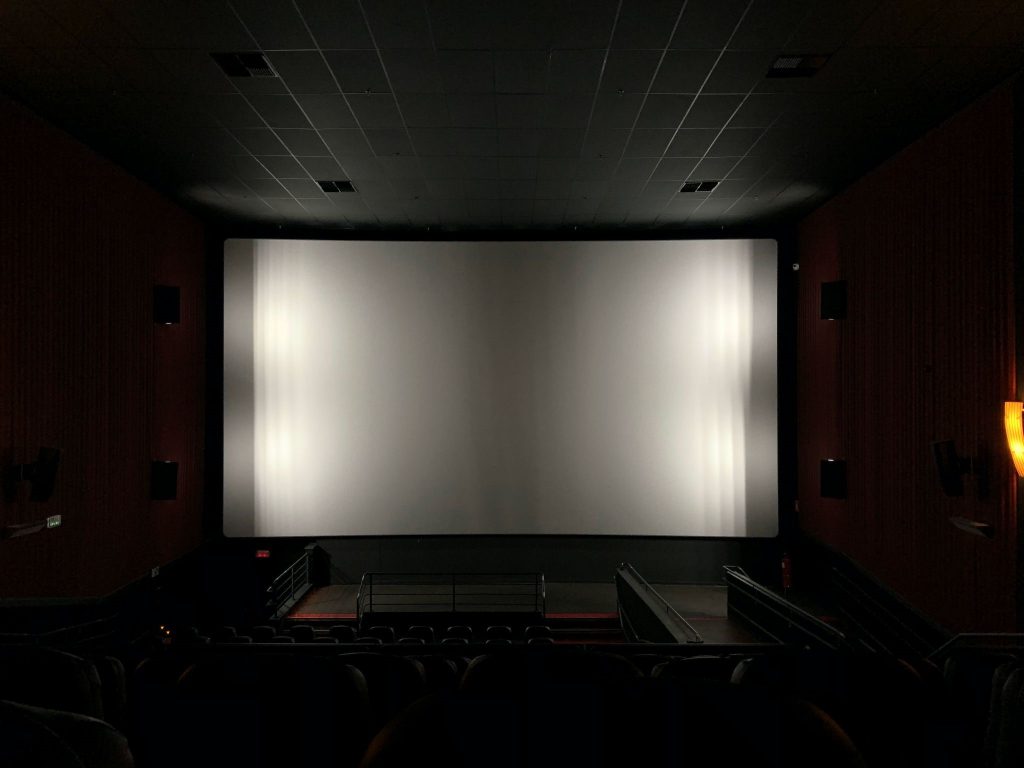
Large projector screens are often fixed-frame – they do not have any mechanical parts.
Large screens for large audiences help them avoid straining their eyes when watching a movie. Since cinema rooms are almost similar to home theaters, selecting a cinema projector screen with a 16:9 aspect ratio
would be best.
However, selecting a powerful projector that can project a lot of light to the big screen would be best. Leading experts recommend using a projector that can produce more than 4,000 ANSI lumens.
Final Thoughts
Selecting the ideal projector screen matters a great deal – it affects your viewing experience. Projector screen sizes are subjective to the room where you’d want to use your projector. Here are four factors that you need to consider before settling for any projector screen size:
- Aspect ratio
- Projector screen construction
- Brand and Price
- Distance of the projector from the screen
When selecting projector screen sizes for different settings, always have your projector in mind, as it greatly influences your projector screen size selection. Apart from your projector, you’ll also need to consider your audience – they need to watch movies or view presentations without struggling.
A good rule of thumb is that your audience’s viewing angle should not be more than 40 degrees. Otherwise, they’ll struggle to watch your presentation or even a movie.