This article covers everything you must know about projector lumens. It will guide you in choosing the right projector for your needs.
The use of projectors has been widespread ever since its inception. Even today, where cheaper LCDs and LED TVs are available, projectors still find their way into relevance. You can see them used in business presentations, home theaters, worship houses, and gaming stations. But some people have switched to LCD and LED televisions due to dissatisfaction with projectors. The wrong choice of projectors could be the main caused why some people opt to use TVs rather than projectors.
Choosing the right projector that would suit your needs is critical as several factors will come into play regarding its overall performance. One of which is the lumens of a projector. Lumens are the measurement of brightness that a projector emits. And choosing the suitable lumens for your projector will vary depending on your type of usage and the environment in which you will use it.
But there are still many technical aspects that one must consider when browsing for a projector. So in this article, we will guide you on the perfect number of lumens your projector must have and its other specs and features to make it suitable for your needs.
What Do Projector Lumens Mean?
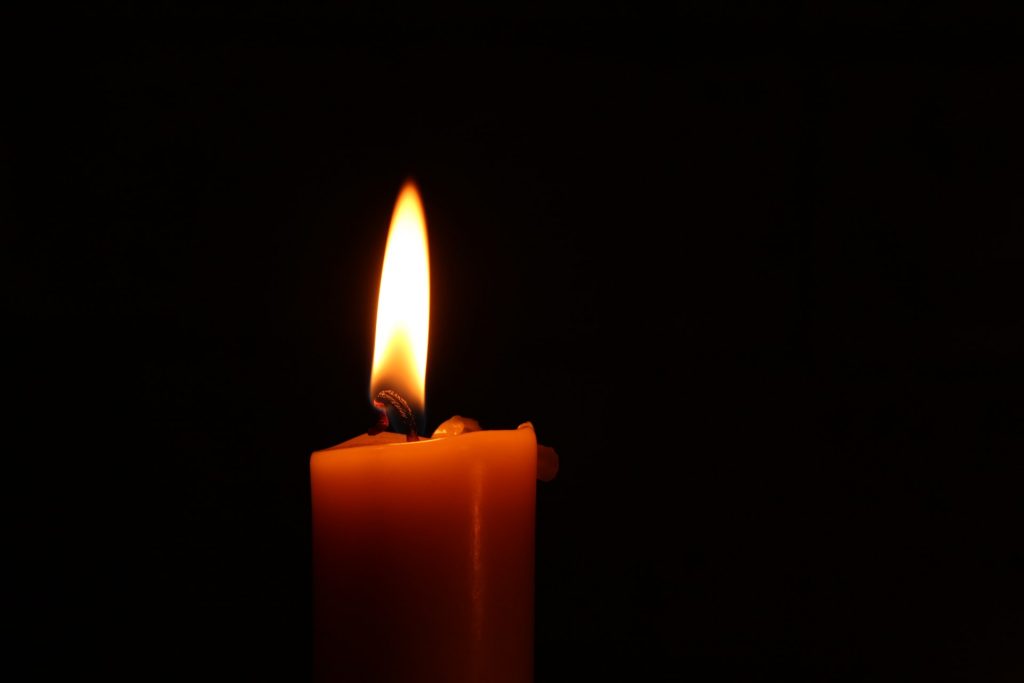
As mentioned, lumens are units of measurement for the brightness of the image generated by your projector. Like the SI unit of distance, meter (m), lumen (lm) is also the SI unit for brightness, which is about 1/12 of a candle’s brightness. In other words, the brightness of a single candle is equal to 12 lumens. But how does lumen impacts the projector’s performance?
As you may already know, one of the most important specifications when choosing a projector is the lumen, which will tell us the brightness level it emits. So you may want to choose the one with a higher lumen so that it will perform well even in a bright environment. But other projectors on the market now use ANSI lumens rather than just lumens.
Difference between lumens and ANSI lumens
When shopping for a new projector, you may notice in the device’s specifications that some have a brightness measured in lumens, while some are in ANSI lumens, especially for the newer models. While both of these units of measurement serve the same purpose – to measure the projector’s brightness, there might be a slight difference between these two that is worthy of note.
When projectors first came to inception, manufacturers always used lumens to measure how bright a projector was. But not since the American National Standards Institute (ANSI) set a standard for measuring lumens in 1992. Since then, most manufacturers have been slowly trying to adopt these standards set by ANSI. Although the actual tests may differ and are more complicated compared to the traditional measuring of lumens, ANSI lumens provide a more accurate lumen value. Thus, the better choice.
How many lumens does a projector need?
Now that you have read the overview about lumens, you might wonder how many lumens a projector needs. Or does the lumen value matter when picking a projector? For questions like these, choosing the correct lumen value for your projector will depend on several factors. For people who do not know much about the technical sides of each device, one of the most obvious choices when buying a projector is the one with a higher lumen. However, that is not always the case. You wouldn’t want your projector to be too bright while streaming your favourite Netflix shows just because you have bought a high-lumen projector. In other words, lumens are not the only thing that counts regarding the projector’s performance.
Several factors will come into play, such as contrast ratio, resolution, zoom ratio, and the type of technology used. Even environmental factors, such as ambient lighting, play a huge role in directly affecting how our eyes perceive the projector’s brightness.
When are projector lumens too bright?
Before we dig into those factors affecting the projector’s image quality, let us first discuss the different ratings that will make a projector lumens too bright.
As mentioned in the previous section, you don’t want to end up with a high-lumen projector, as it will affect your overall experience. Whether you are using it for gaming, home theater, or business presentations, having a too-bright projector can be distracting. But how bright is too bright?
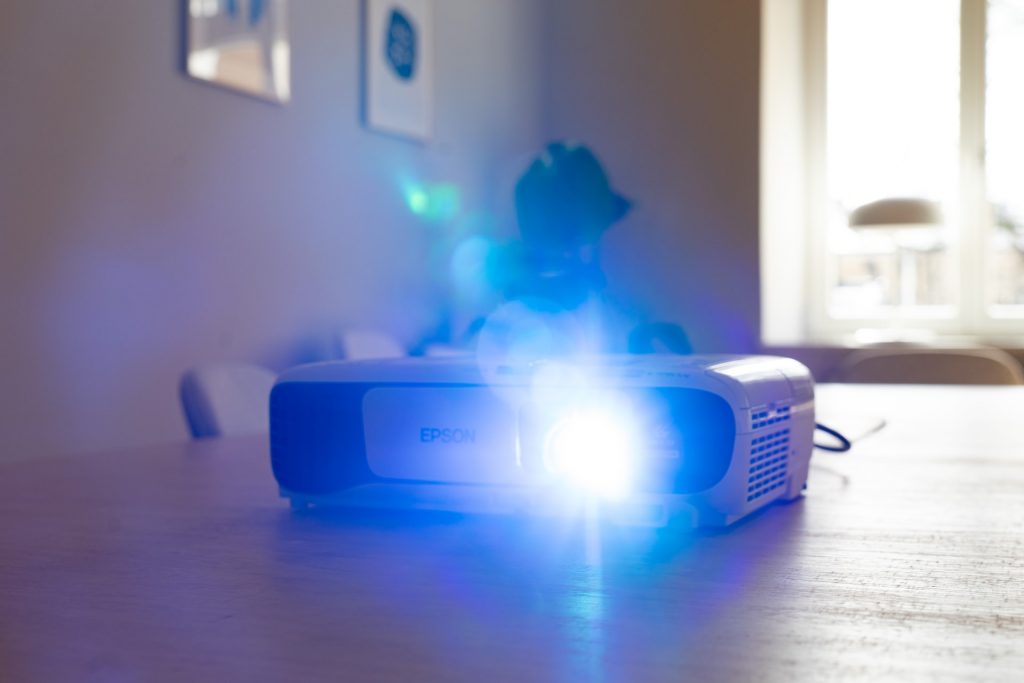
A projector that goes way above 5000 lumens can be too bright if you use it in a dimmed room. Even a 4,000-lumen projector can become too much depending on the usage. Using these high lumen projectors in a dimmed room will be too overkill, and a waste of money since projectors with a high lumen rating will likely cost more.
Things to Consider in Choosing a Projector Lumen
Before you make up your mind on which projector to choose, you must first think about how and where you are going to use it. You can use this as your guide to help you decide which projector lumens will suit your needs.
Projector lumens for business and academic presentations
Aside from using LED television, projectors are very useful in a corporate environment, such as business and academic presentations, especially if you present in a large crowd. A 2500-3000 lumens projector would suffice your needs for normal business presentations in a small room. In a conference room setting, 3000-4000 lumens might be necessary as it produces enough light, but not in a way that it can be too bright. However, a projector of 4000 lumens and above will do the job when presenting in a large crowd.
Projector lumens for home theater
Fancy streaming your favourite shows and movies on Netflix and a wider display? Lucky for you, you can also use projectors for DIY home theaters. For this purpose, you could go for as low as 1,000 lumens and as high as 3,000 lumens. On the safe side, you may settle roughly between 1,500-2,000 lumens. This is because custom and dedicated lighting in a home theater greatly affect the total brightness of your projector’s output. So choosing either a low or high-lumen projector may affect your viewing experience.
Projector lumens for gaming
As weird as it may sound, you can also use your DIY home theater as a gaming hub. Despite having a wide range of selection for gaming monitors on the market right now, you can, too, use a projector for gaming purposes. Be it for your satisfaction or to flex playing on a bigger display to your friends, you can never go wrong should you decide to use your projector as your screen.
For this, the best option would be at least 2,500-3,000 lumens. Going lower than that might affect your gaming performance as you need to have enough brightness to see every object on your screen. The only downside to using a projector when playing games is the significant increase in latency.
Projector lumens for worship houses
If you use your projector in a worship house, like a church, it is safe to assume that it will be in a larger facility with large crowds. A projector of 5,000-6,500 lumens will be an excellent choice, as it can produce a bright and clear image, regardless of the lighting. You can use it in big churches and halls without sacrificing image quality, making the objects and texts readable.
Other specs that affect the projector’s image quality
Aside from lumen values, the following specs will significantly impact a projector’s overall image quality.
Resolution
Resolution is the maximum value of horizontal and vertical pixels a projector is capable of displaying. The more pixels a projector has, the sharper and the clearer the image it produces. But keep in mind that high-resolution projectors tend to cost more.
Contrast Ratio
A projector’s contrast ratio is the difference between its lowest and highest brightness levels. It also describes the ratio of light reflected from an entirely white and a completely black image. It gives the projector the ability to produce more detailed and accurate colors.
Throw and Optical Zoom Ratio
The optical zoom ratio will allow you to magnify the image to 1.25x, 1.50x, or 2x larger than its original size, depending on your projector’s maximum zoom ratio. In addition, the throw ratio will also help you determine the distance of your projector to your screen. The lower the ratio, the closer the projector may be to the screen, which is helpful when presenting in restricted spaces.
Effects of ambient lighting on projector lumens
After considering those factors impacting the projector’s image quality, we now come down to the final aspect: the ambient lighting. Ambient lightings are those natural lights coming from your door or windows. In most cases, ambient lighting will be the deciding factor as it determines how well your projector can produce an image on your projected screen. If you have a low-lumen projector, you should ensure minimal ambient lighting. Otherwise, you will end up with a blurry screen. So it will be wise to plan your set-up before the actual presentation.
Conclusion
Choosing the right projector lumen for your ideal use can be tricky, especially if you don’t have enough technical knowledge. So before deciding which one to pick, think first about why you are buying a projector and where you will use it. We hope this article helped you make an informed decision, and may you use this as your guide as you plan to buy your next projector.